

dress/code with Tanner Skilton
“I don’t subscribe to the idea that for events you should take one thing off. I’d rather put five more things on.”

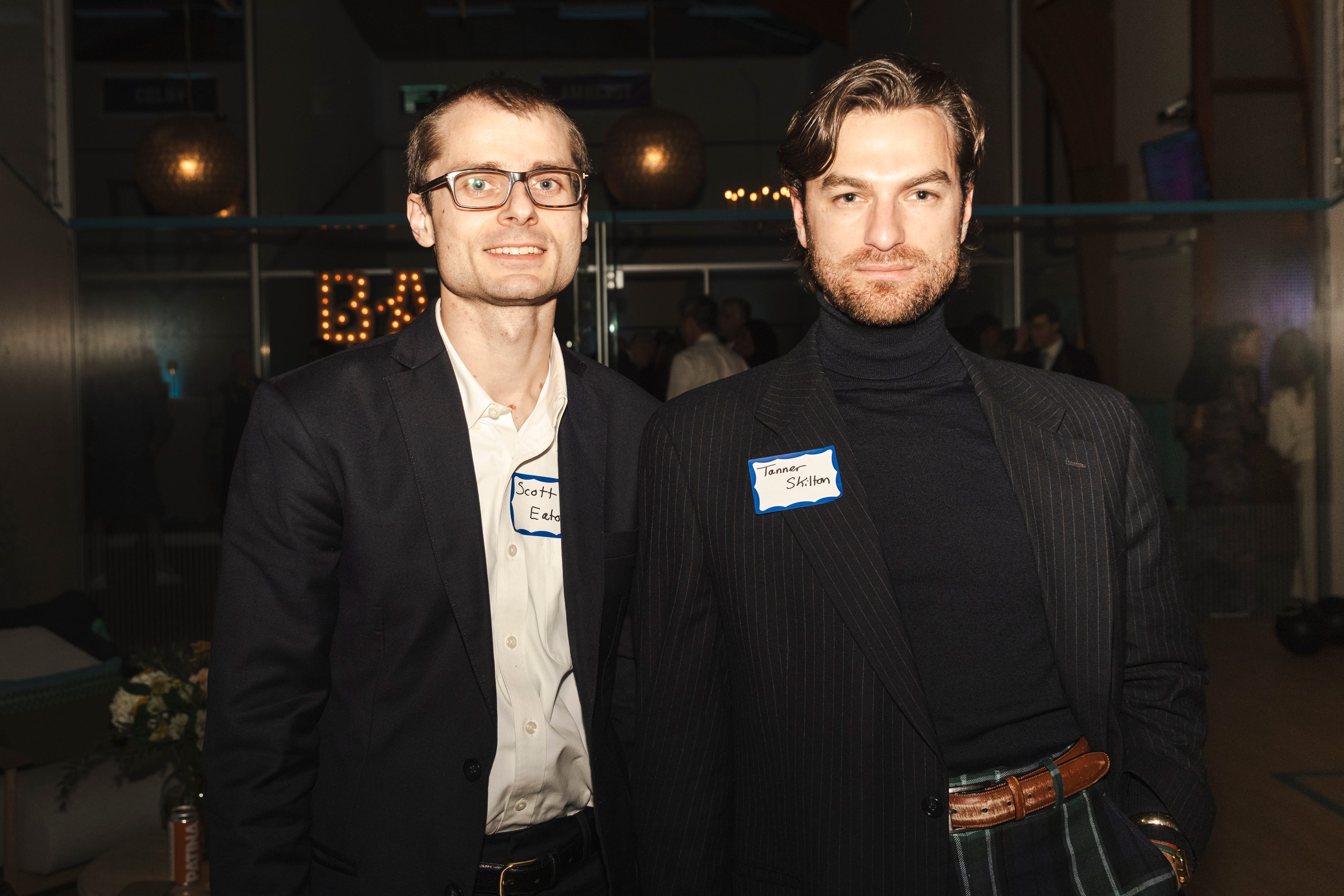
Tanner Skilton arrived at a fundraiser gala in December 2025 wearing a black turtleneck, an oversized blazer, and green & navy tartan pants. I was shooting the event and asked for a photo so I could capture the look. While editing the event images I ran into the shot of him, and was reminded how much I loved his look that night. And thanks to an age-old party accessory — the nametag — I was able to track him down to ask for an interview.
We met at my studio in February to get to the bottom of his style essence, from family heirloom vintage and shopping womenswear to his favorite Pride Portland style event. We also went beyond style to discuss his expansive involvement in the culture of Portland, the exercise of rejection, and the one thing he does daily to keep life in balance.
Interview and portraits by Georgia Dixon | Dana Warp Mill, February 4, 2026
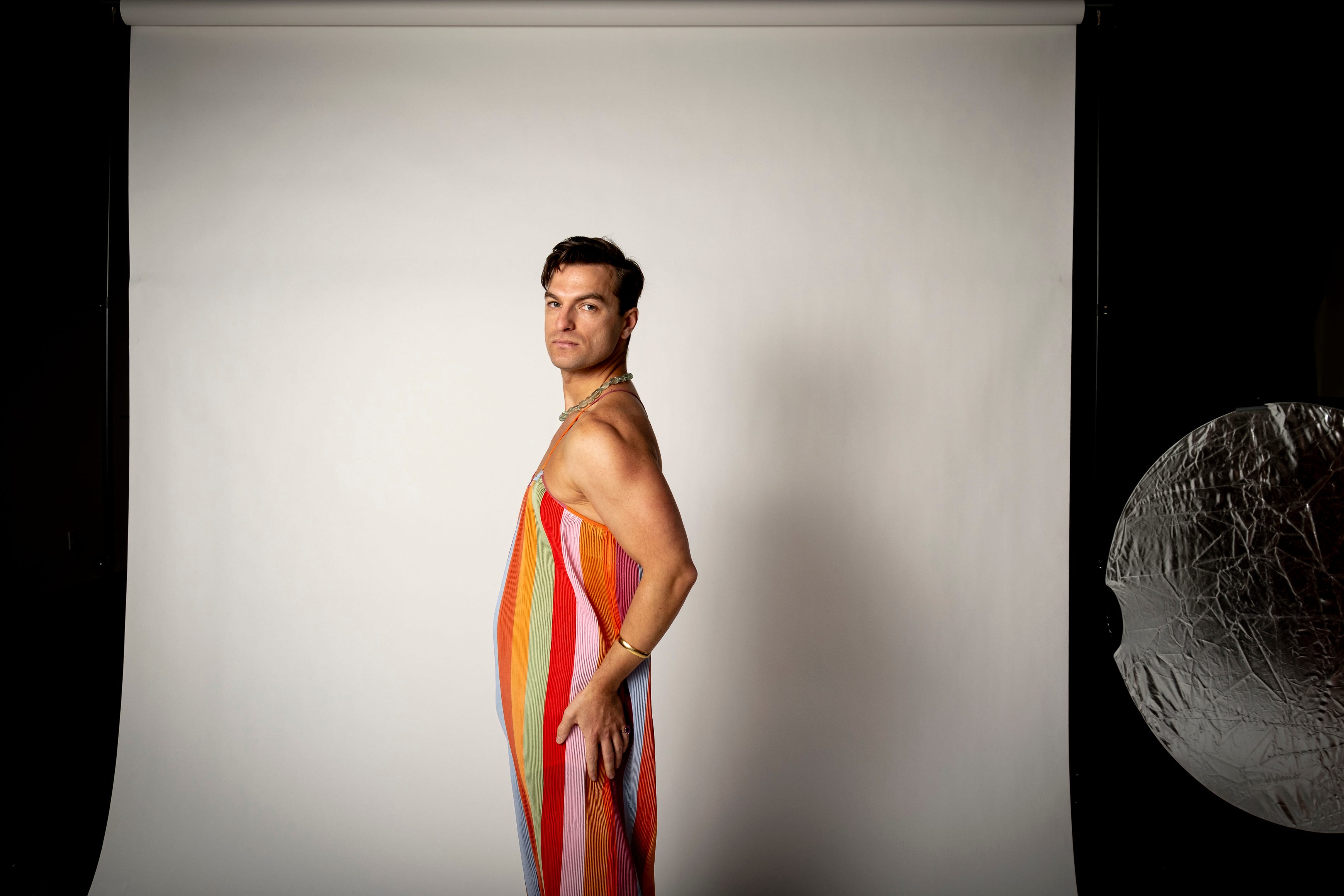
One of the first ways you described your personal style to me was in saying that you don’t subscribe to gender norm dressing. Was there a specific period in your life when you started rejecting those norms and crossing the lines between femme and masculine clothes?
I came out when I was 25 and that’s when I started experimenting with more openly gay-perceived clothing. Like metrosexual clothing, so lots of sheer or tight clothes. I don’t think I started crossing those gender lines comfortably until I was probably 27. I started experimenting with wearing clothing from the women’s section when I was late 20s, early 30s. Overall I think it was just an intention to push my own boundaries.
Were there things in the women’s sections that met a desire or an interest that you weren’t seeing in the men’s?
Women’s clothing does a really good job of creating balance; either the top half of the outfit is really fitted and the bottom half is really loose, or vice versa. I love women’s tops because they fit in all the right places. Of course a well-tailored men’s suit is where it’s at, but often men’s clothing is just kind of..on, it’s just on your body.
There’s also something about wearing women’s clothing that, to me, accentuates my masculinity. If I’m in a skin tight woman’s halter top, you cannot avoid — whether I cannot avoid or you cannot avoid — seeing the way my muscles or my body are accentuated in the outfit. Something about that makes me feel more manly when those aspects of my body are being shown through the women’s clothing lens.
You also talked a lot about vintage menswear from your dad and grandfather.
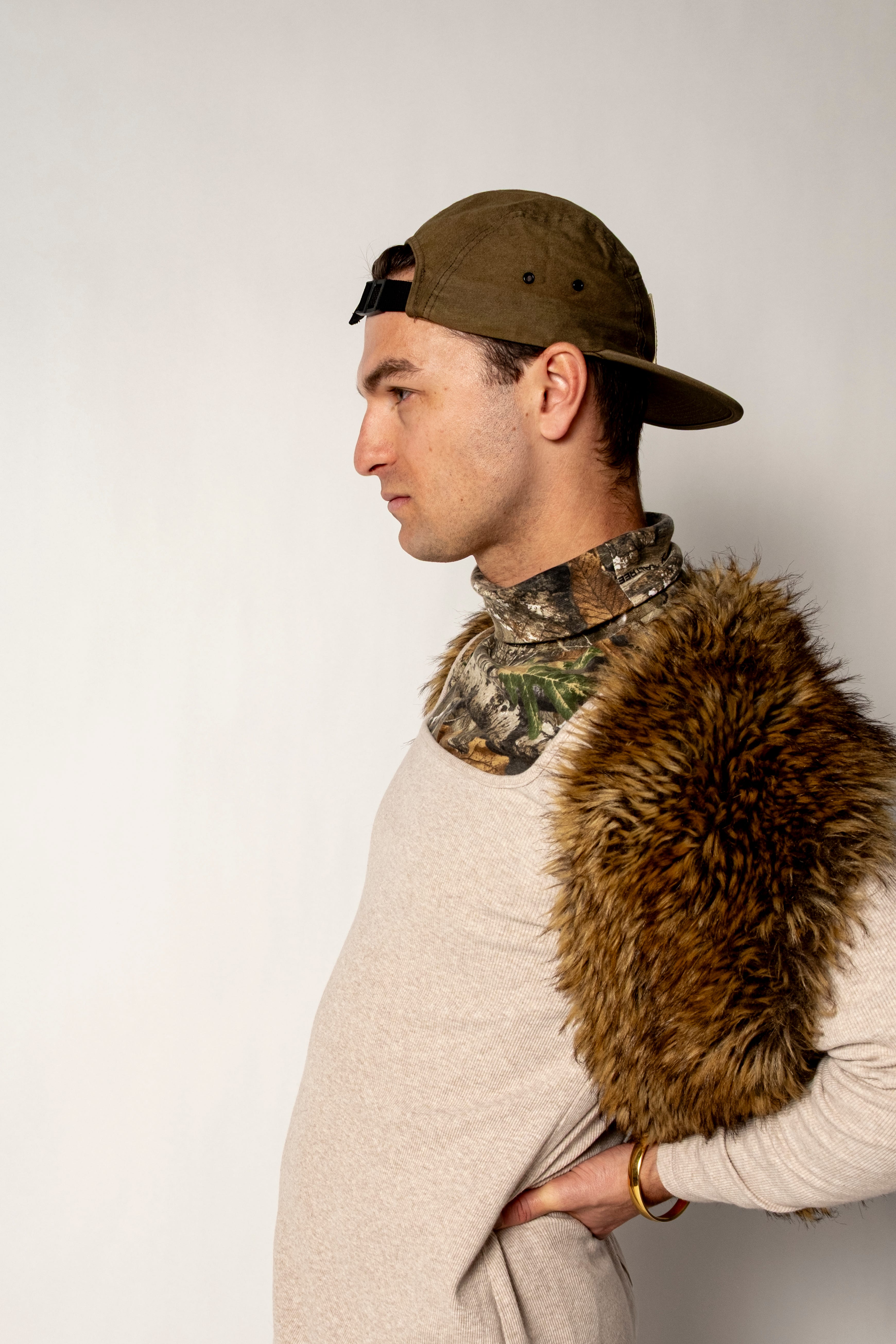
In men’s fall/winter, probably half of my wardrobe is vintage. My dad’s parents managed a clothing store called Carroll Reed’s. This was a very old school New England outfitter store, but with a preppy air about it. The plaid pants I wore at the Squash Ball are from Carroll Reed’s. They’re wool, high-waisted, very 1970s. They’re blue and green tartan and well-made, like the tartan lines up. I don’t remember when my dad gave them to me, but I do remember finding them and begging for them.
I also have a large collection of men’s dress coats that I inherited from one of my parents’ very close friends. This man, his name was Joe Brouillard, he was like a surrogate grandparent to me. He worked on Wall Street and had an incredible clothing collection. He didn’t have any grandsons, so when he passed I inherited his wardrobe. Brooks Brothers, Hermes, incredible pieces — some of them never worn.
I have probably 10 vintage dress coats, some are from my biological grandfather, and some are from Joe. Everything from camel hair and suede to leather and tweed. The pieces from Joe are just things he was wearing as a stylish guy in New York City. My grandfather was a little bit more New England, an L.L.Bean meets J.Crew vibe. And I have all those pieces because I refuse to ever let them go.
How would you characterize that style of your dad and grandfather?
I never knew my grandfather; he died within six months of my birth. But I’ve always really loved my dad’s style. My dad is someone who doesn’t dress up often. He was a vocational arts teacher for my high school. So tech ed, wood shop, metal shop, all that stuff. His daily clothing was a uniform of Carhartts and boots.
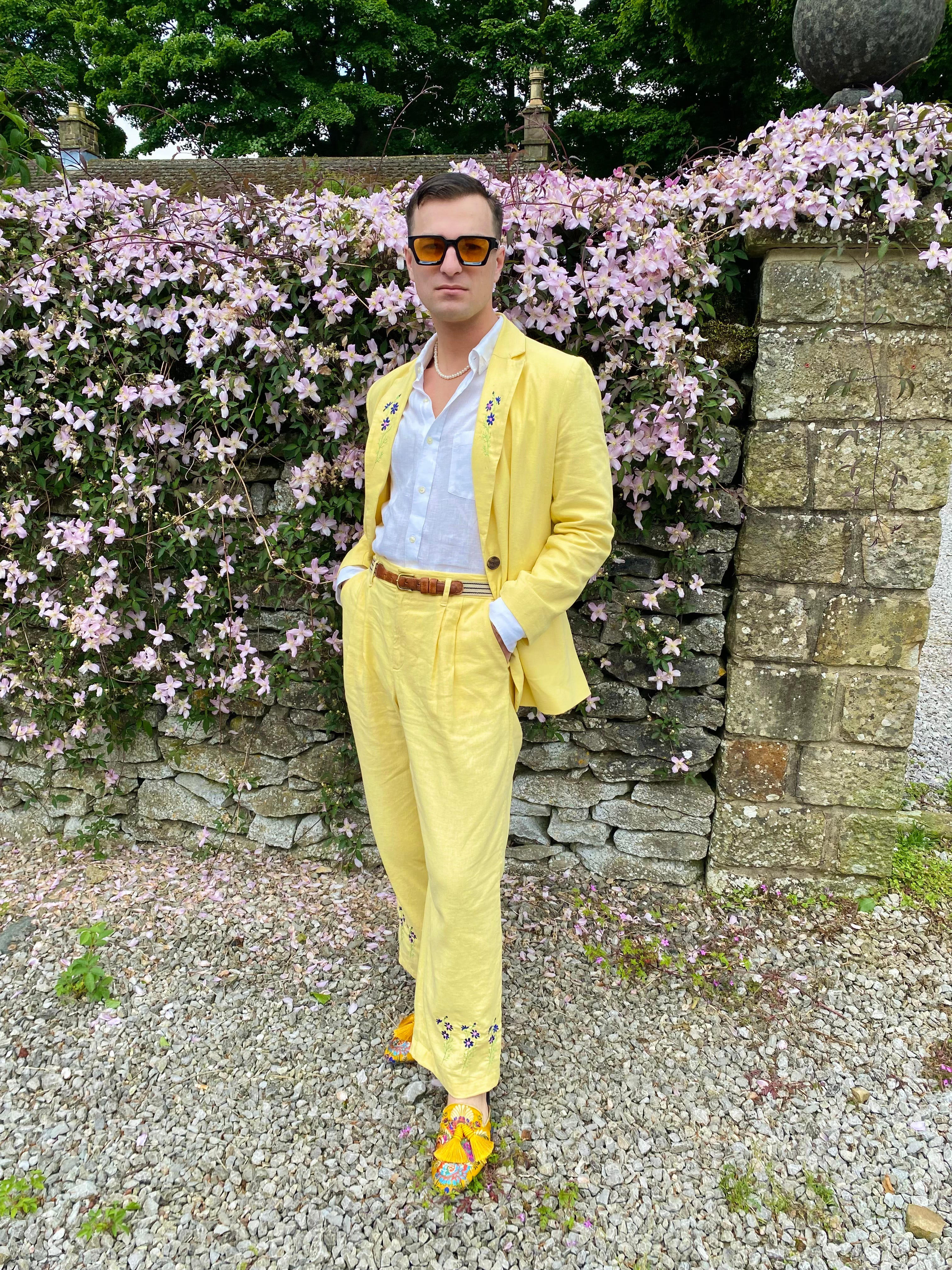
But then he’d have an event to be at and he would go into his closet and it was like, where are these amazing pieces coming from? There were beautiful blazers, great bright yellows and tartans, and cool sunglasses. He still has them and I know I’ll continue to inherit them. I’m trying really hard to preserve things, even if I’m not wearing them. In our basement I have a big plastic bin where I’m storing clothes that I no longer wear. I’m intentionally saving these pieces to re-gift to someone. I have three nephews who are very young. Maybe they’ll see pictures of me when I’m old and wonder, where is this? I want to hang onto some of it because my dad did a really good job holding onto high quality pieces [from his dad].
It’s so cool to keep things in the family history like that.
Luckily there’s a culture of preservation. If I’m wearing something of my grandfather’s I’ll try to remember to take a picture to text my dad. Well, my dad doesn’t text. To text my mom, to show my dad. Like, hey, I’m wearing Grampy’s coat!
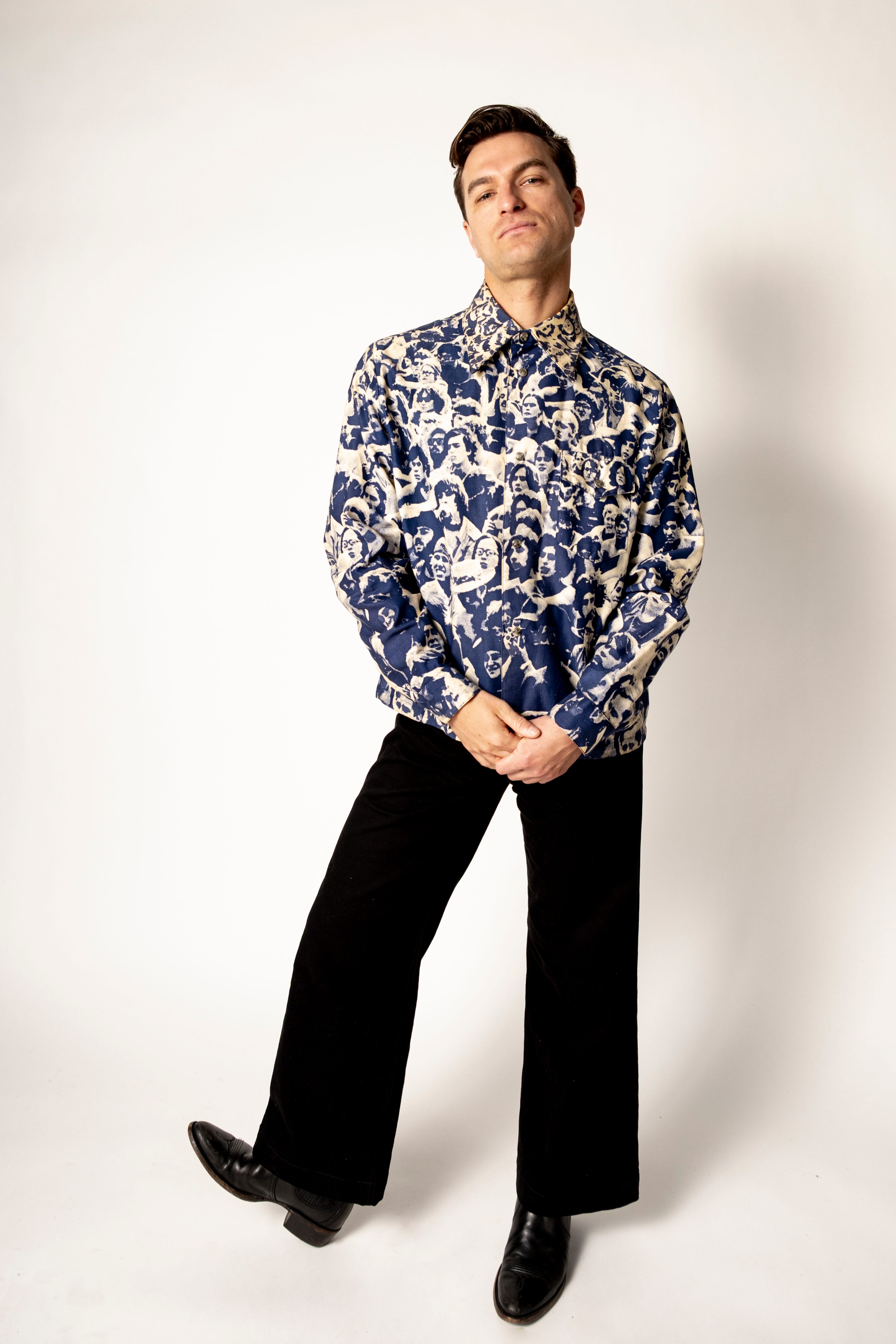
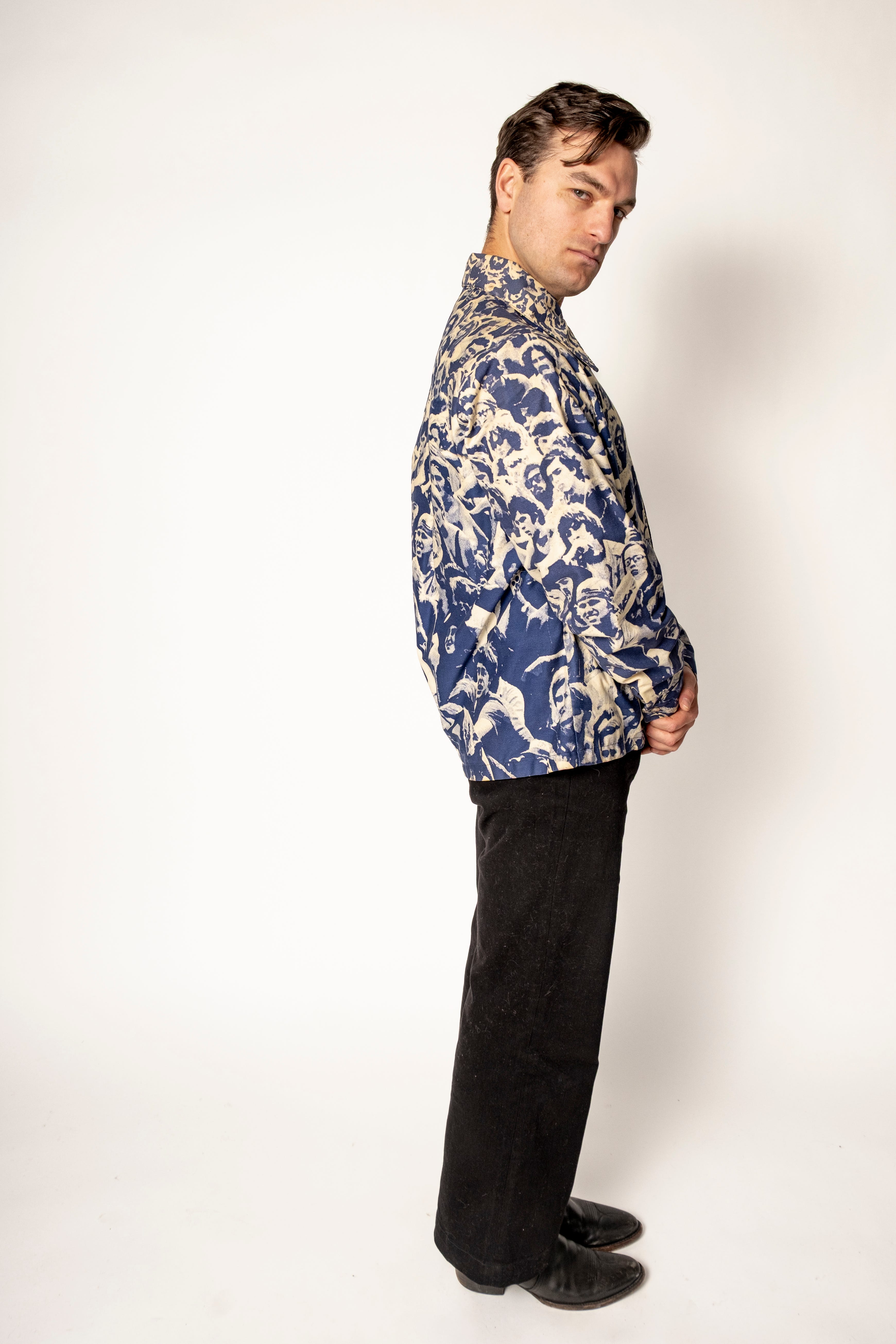
I have a tuxedo that I inherited from Joe and I love wearing it. Every time I wear it, I text the Brouillards to tell them I’m wearing Joe’s tux. I had it tailored to my body and I love that there’s a story to the piece when I break it out for an event.
Does all this vintage get integrated into your daily wear?
Totally. And I also thrift a lot. I’ve found incredible pieces at all types of thrift stores, all over. Whether I’m in New York, or Boston, or here in Portland. Thrifting on a vacation is fun. And I like to do it alone. I like the activity of going without knowing what you’re going to get. Whether it’s an actual thrift store or a vintage market or a bulk resale store. Like I find incredible things at Marden’s.
I love Marden’s!
That store is so chaotic, but they have such good clothes. I love going and finding crazy pieces in both the men’s section and the women’s section, mixing, matching. These jeans are J.Crew and I think I got them at Marden’s for less than $10 because some J.Crew store caught on fire somewhere and they had to liquidate the inventory. I have some high quality pieces from there. I also have some random weird pieces that you wouldn’t even know the label. So yeah, I love Marden’s.
“I definitely don’t plan my outfits. I am more last minute with it. If anything, it makes me late to work.”
Do you have any favorite spots to thrift in Maine?
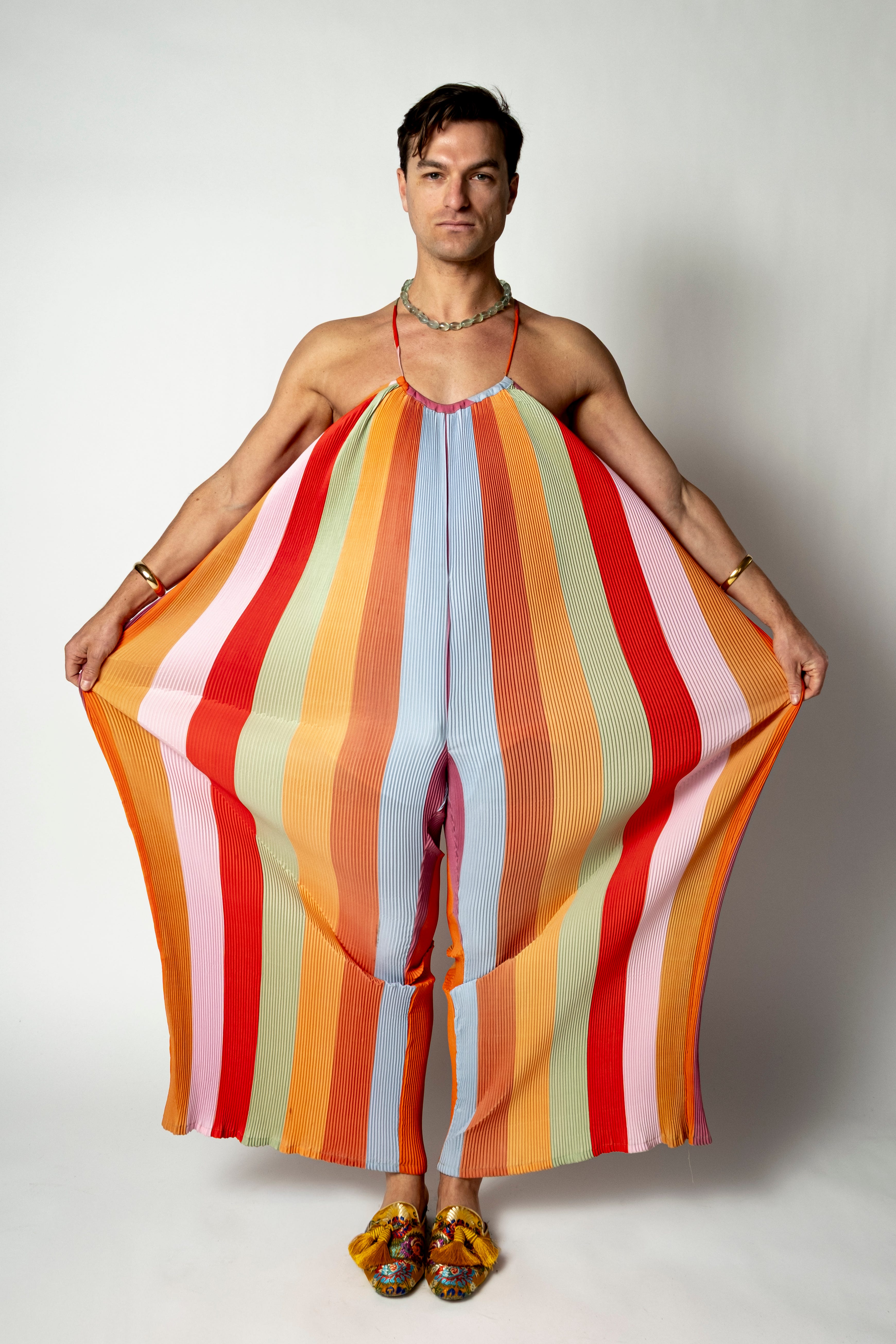
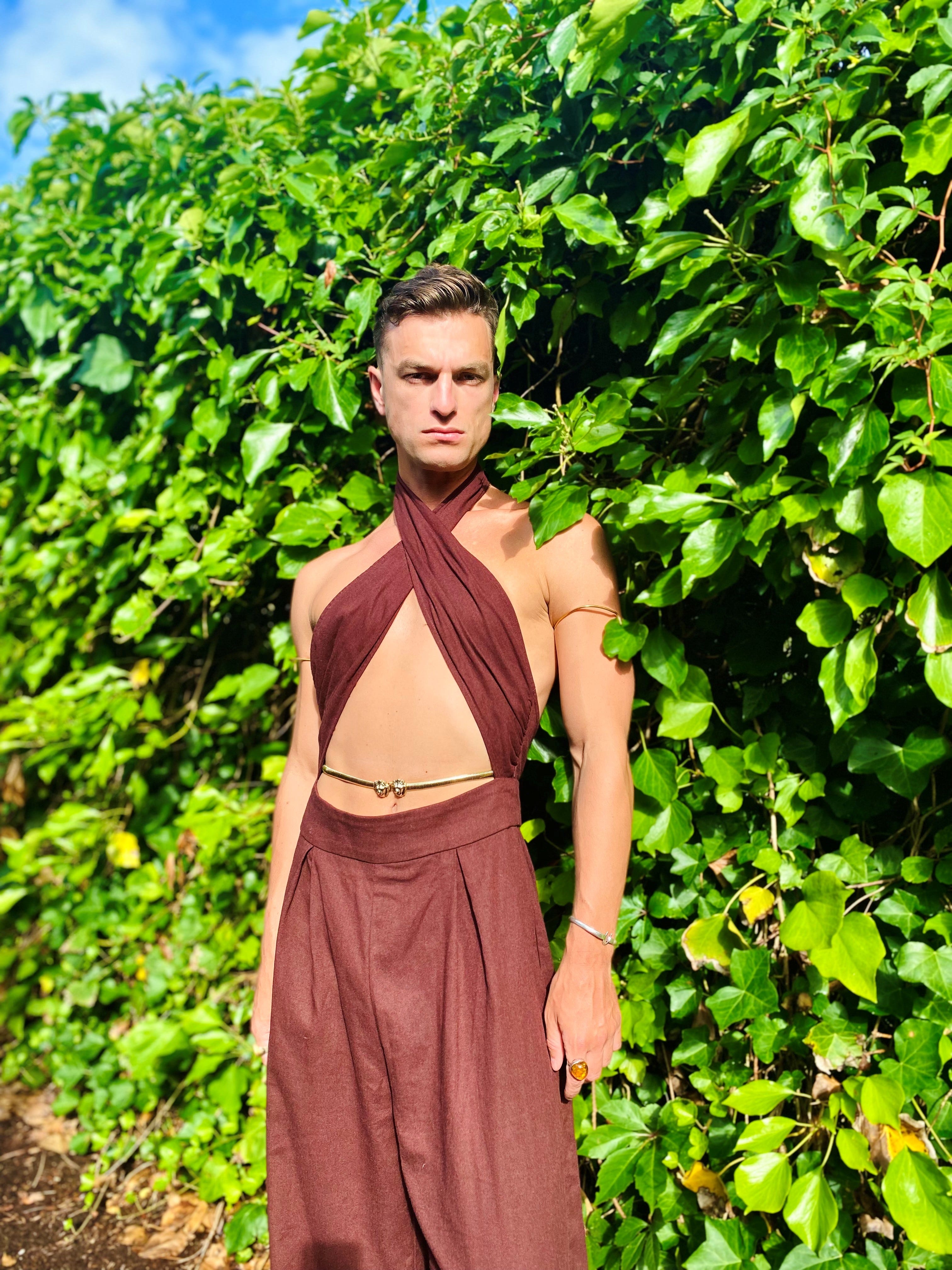
I love the Haberdashery in Freeport and in Portland. One of the pieces I brought today is from there, it’s this bold jumpsuit, very palazzo pant with a strappy top and it’s backless. It’s one of my absolute favorite pieces of clothing.
You said you prefer to shop alone — tell me more.
I love shopping alone. If I’m in a bad mood or I’m stressed out, it’s just something that’s fun. But I try to not do it too much. I want to move away from purchasing clothing for single use. I have a lot of clothes that have been worn like twice, ever. In the history of clothing and wearing fine, upscale pieces, people would not have a one-and-done garment. You’d wear the same gorgeous garment 5 times a year, 10 times a year, to your special events. So I’m trying to do that more. A lot of my everyday things like jeans and shirts and sweaters, those get worn until they’re threadbare.
You talked about not fitting squarely in any style box and that you wear a lot of different outfits based on your mood. Are there any fundamental pieces in your wardrobe that tend to show up across different moods?
There are things that show up in my everyday wardrobe, like these Frye boots I’m wearing. They were one of my first big purchases in my mid-20s, when spending a couple hundred dollars on a pair of shoes felt irresponsible. But they’ve lasted all this time. I wear them all the time. They’re a Chelsea boot, but a little cowboy-esque.
I have two pairs of good black jeans, flare and straight cut. Those get worn all the time, year round, doesn’t matter. And this blazer, outside of summer I’m wearing this probably once a week.
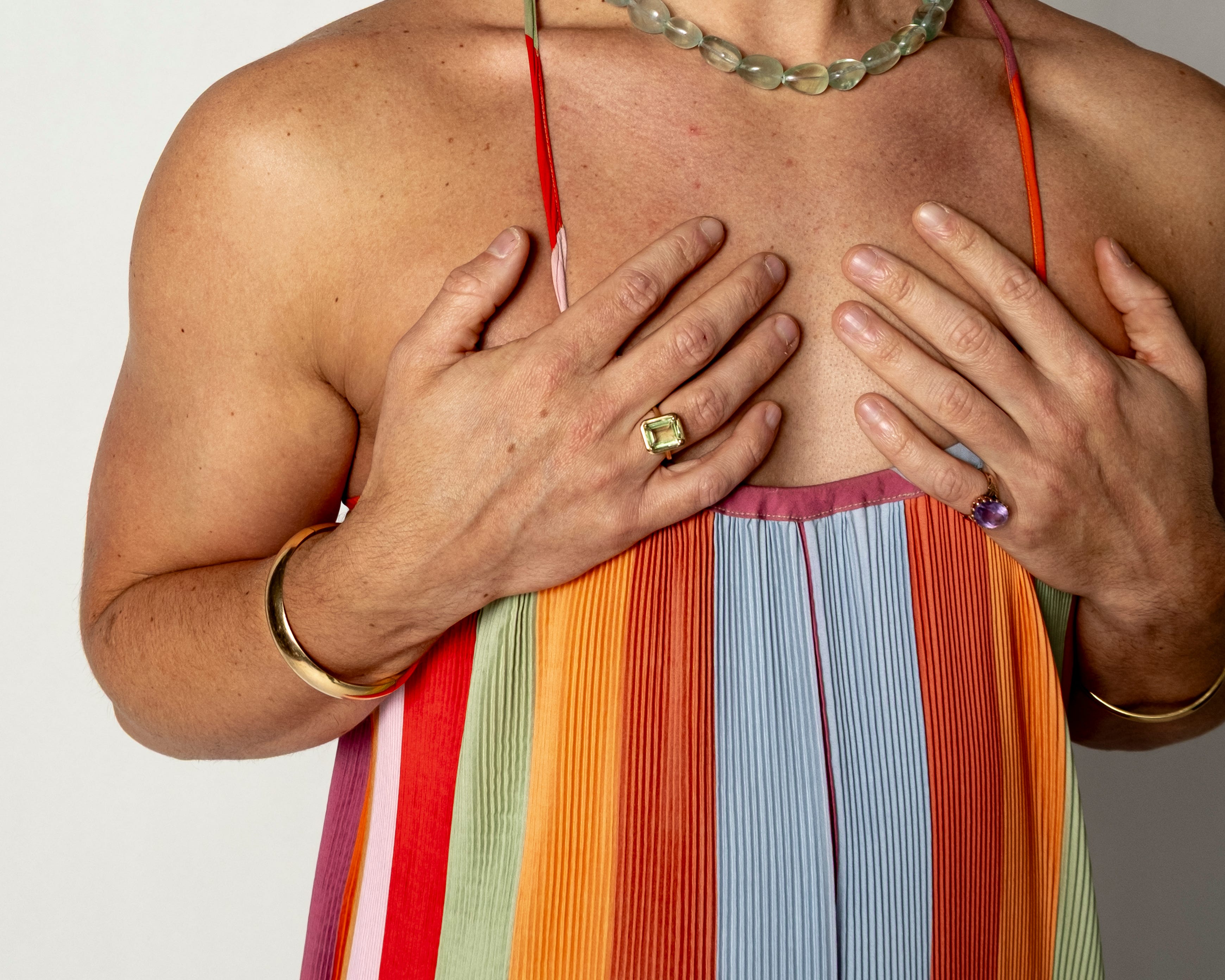
I also really love jewelry. I always wear a silver Lover’s Hoop bracelet my boyfriend got me in the Virgin Islands. I wear that every day, no matter what I’m doing it’s always on. I have a lot of inherited jewels as well. I’ve gotten more comfortable asking for things that would normally be passed down to female inheritance.
How does the mood-based dressing interplay with those recurring pieces? Do you wake up feeling a certain way and go with it?
I definitely don’t plan my outfits. I am more last minute with it. If anything, it makes me late to work. Mood can be seasonal. Mood can be of the day, or of the night. What music I’m listening to, or maybe an art piece that I saw that reminded me of a certain fashion era.
I work in nonprofit fundraising so the fall months are go, go, go. I’m doing everything from big speaking functions to meeting with a CEO to talk about how we can partner with their company. In those situations I find strength from a traditional suit. I will wear a men’s suit and a well-fitted, tucked-in tee, like I’m on the campaign trail. I don’t want to be too formal or too overdressed. Showing up with lots of jewels or cuffs and a tie, it feels too serious for a nonprofit. I’m coming in as a man of the people, and I want to look that way, but also buttoned up and serious.
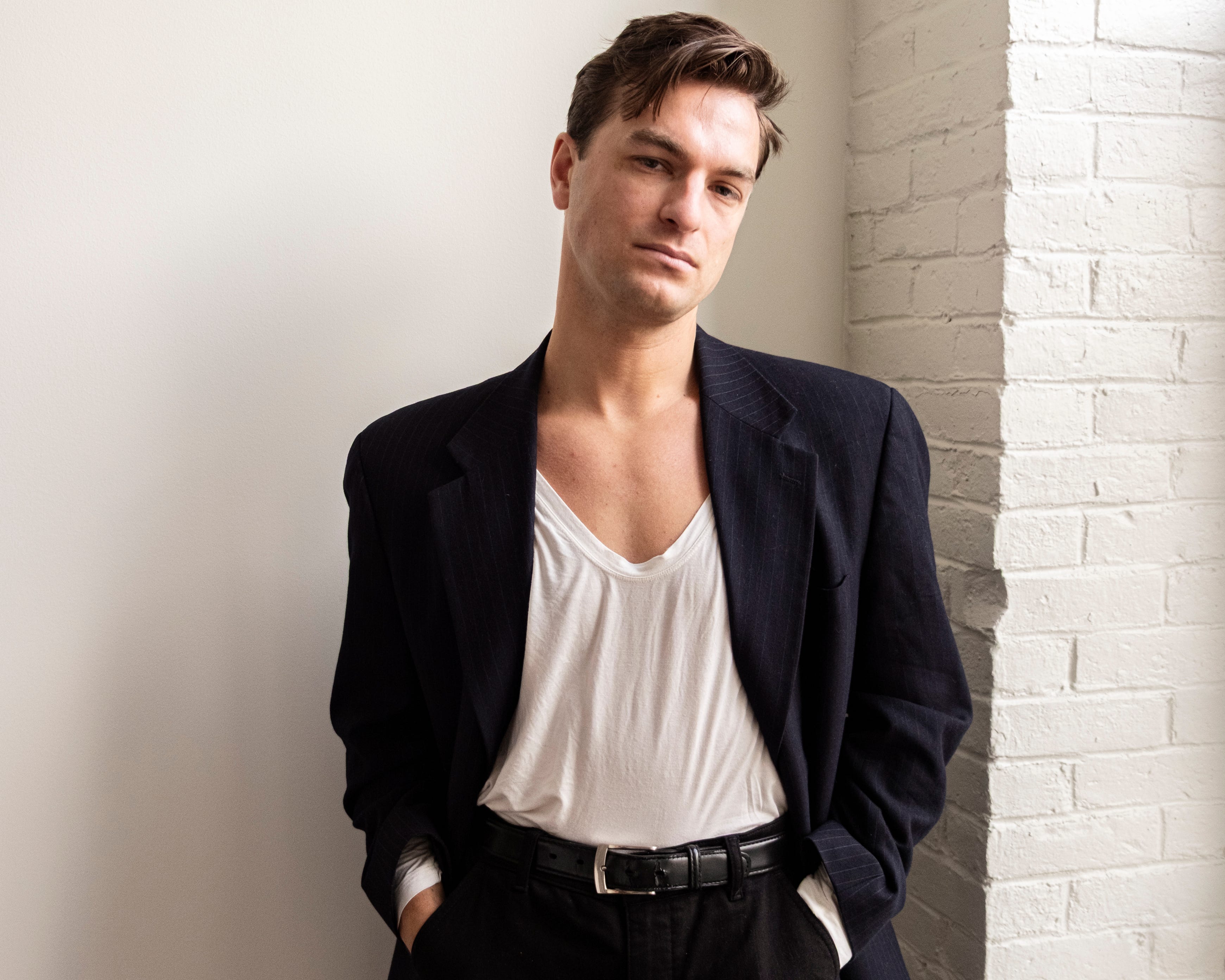
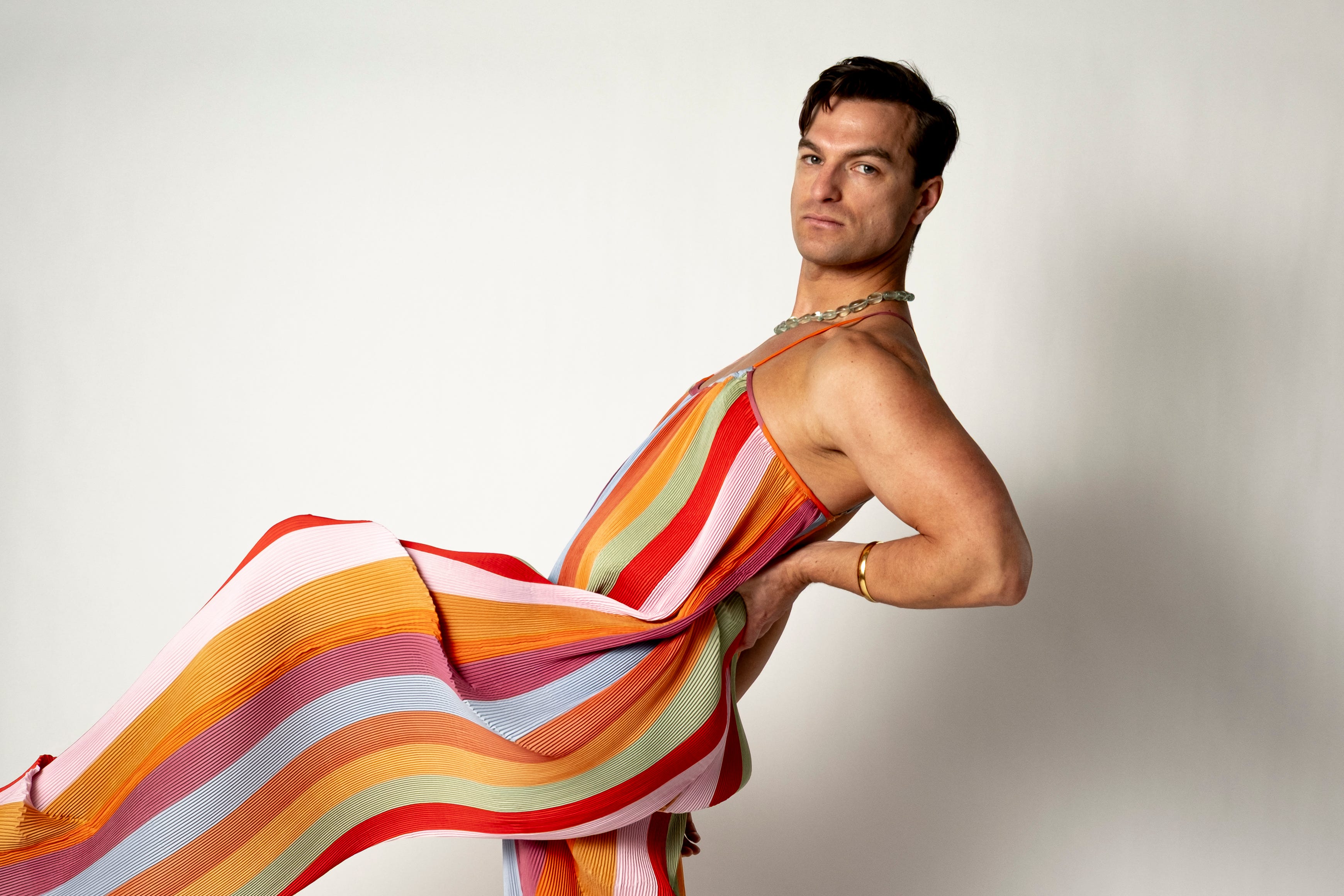
If I’m leading a meeting at work, I want to dress with power. I derive power from silhouettes, like this big blazer with the shoulders. I feel like it makes me look bigger, but also makes me look fit in certain areas. In the summertime, my style is very resort. It’s little strappy tops and shorts. I have a good collection of sarongs that I’ll just throw around my body. It’s about feeling fun and summery and flirty.
You grew up skiing in Vermont, and it’s still a really big part of your life. You also teach spin at Jibe. What kind of influence does sportswear have on your style sense?
Skiing is as normal to me as walking. I grew up in a ski town, ski racing with my sister, my dad was our coach our entire life up until, I like to say, when I retired [laughs].
And skiing is an incredibly social cultured sport. I love aprés ski fashion; I really love the mix of function and fashion. My mom makes these aprés skirts out of old puffy ski jackets that have cuts or rips. The idea is that after skiing, you pull it on over your long johns, with your little turtleneck, and you go to the bar for aprés. She’s been doing this for years. I was always telling her she was going to see this pop up in Vogue and that she should dig in now and start selling them. But she doesn’t care, she just makes them for her friends.
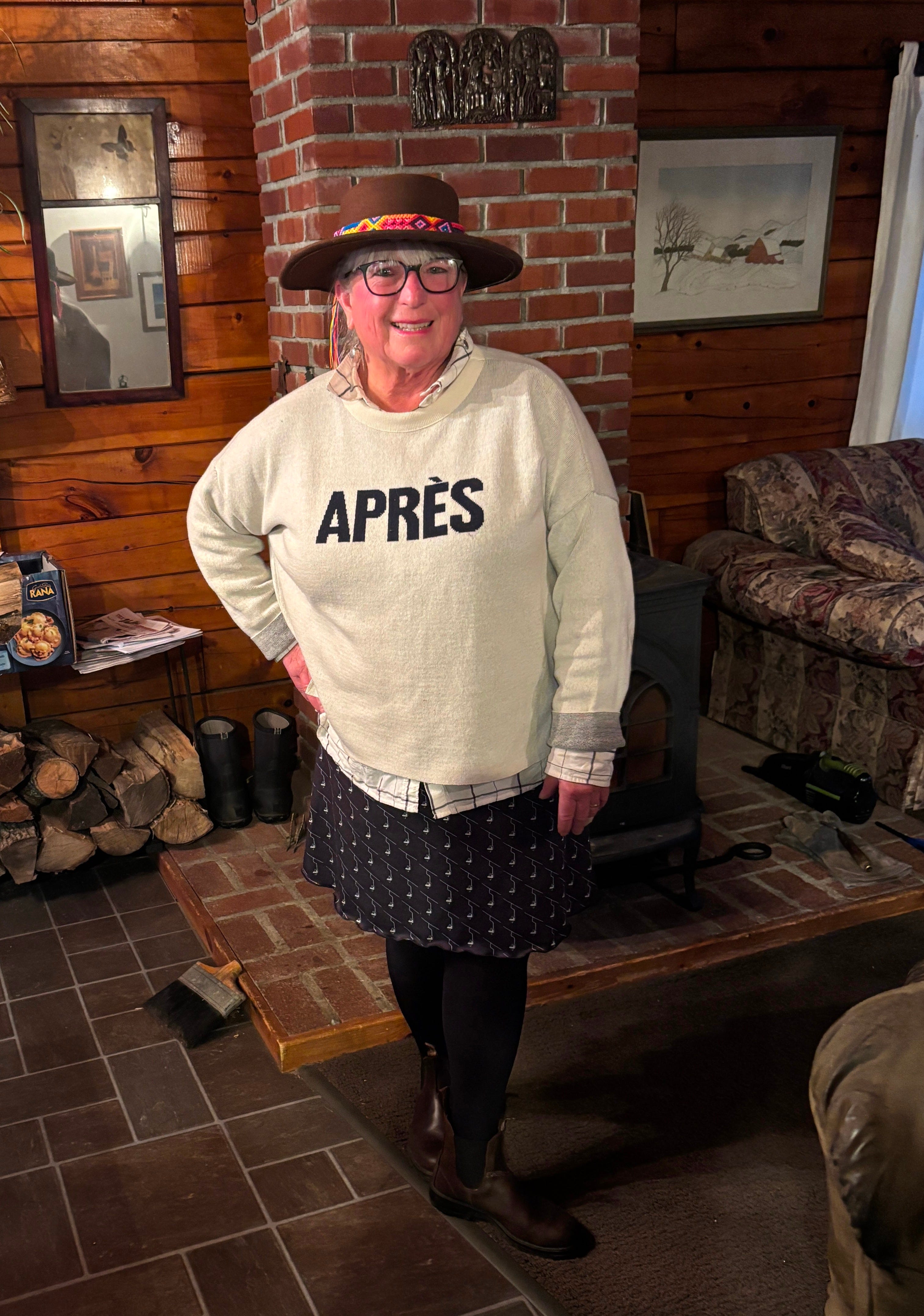
So I do a similar thing if I’m going to meet friends after skiing. I have a pair of shorts that are like those skirts [puffy jacket material]. You throw them on over your long johns and then you get a cool hat because your hair looks crazy, and a big puffy turtleneck that you balled up in your coat bag, and you go and have a beer at the end of a long ski day.
“I’m looking in the mirror in this outfit that’s made for women, and there is so much strength in the feminine form. I feel like I’m getting to soak up a little bit of that residually.”
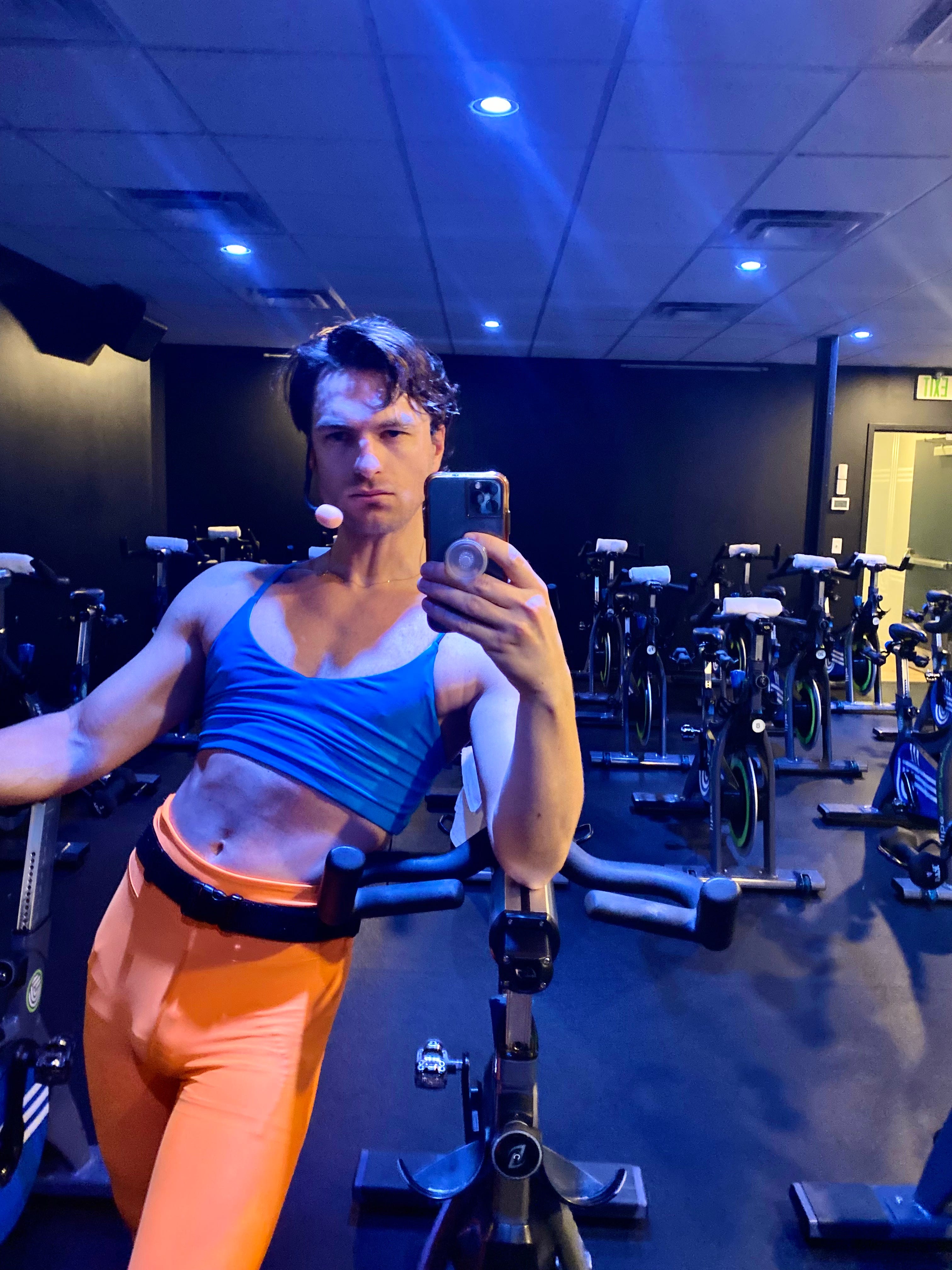
With Jibe it’s been a long journey. I started wearing women’s athletic gear when I started teaching almost three years ago. When I started riding I didn’t think that riding shirtless was an option; I didn’t want there to be any perception of toxic gym culture, like guys in the gym who are grunting or shirtless in a women’s dominant space. So I wear men’s biker shorts, or women’s cycling leggings, and then a sports bra. The low-support sports bras work perfectly for me. I don’t need the support and I started wearing them because it’s very warm in the Spin Studio. It also makes me feel incredibly strong when I’m gearing up to lead a full class of people through a workout. I’m looking in the mirror in this outfit that’s made for women, and there is so much strength in the feminine form and I feel like I’m getting to soak up a little bit of that residually.
Have you always done the women’s athleticwear at Jibe?
Yeah, I started that way. And I’m the only person doing that to this day. I just didn’t feel comfortable in anything else. And having gear that is functional, but that also makes you feel confident, is everything. I remember buying my first set right before I auditioned to be an instructor. The audition process was pretty grueling. I was really intimidated and I didn’t think I would get picked. I did it more as a personal exercise to face rejection and then I ended up getting put forward and put through training and I’ve worked there for over 300 classes now.
Tell me a little bit more about the exercise of rejection. You didn’t think you’d get picked but you were going through the motions; what was that about?
I had been going to Jibe on and off with friends. It was one of the earlier trendy spin studios in Portland. It’s fun and it’s like going to the nightclub but you’re working out. I remember talking to a friend of mine who is now also an instructor there, and I was like, I think I could do this, I think I’d be a good instructor…but there’s no way. He said, Well why don’t you try? My immediate thought was, no.
It’s very safe and very protective to be like, I’m not going to do that. In life sometimes I kick the ice cube under the fridge. You don’t look at it but it’s still going to make a mess of your floor. But I finally got up the courage to do the audition. I went in with the expectation that if I got picked I’d do it and if I didn’t get picked I wouldn’t be bitter or sad. I wanted to do it as this personal challenge of “can I get through this situation.”
There’s a personality component, you have to be able to hype people up and talk through an entire class. Is that aspect integrated in the audition?
It’s both. They have you do a simulated class for 30 minutes, and that was the hardest part. It’s intentionally harder than the normal class, they want to see what you’ve got. At that point I was about 30 and working out a lot, skiing a lot. I was feeling at the peak fitness of my life. In that simulated class you teach one song to the instructors and they don’t tell you what their expectations are. I practiced on a trainer bike up at Sugarloaf. I reserved the whole gym for half an hour so I could have it by myself and practice talking. It felt so weird! It would have been easier to be like, oh I’m not doing that. I’m too cool for that. I had to let go of the do I look stupid vibe. I had to do it, and do it with no shame.
You’re the chair of Pride Portland, how long have you been doing that and what’s been your favorite part of that experience.
This is my first year officially as the Board Chair. It’s my third cycle with Pride. I started as a board member last year, I stepped in as the interim chair after our chairperson resigned, and then this year I was elected chair by my group.
Pride is the largest single gathering in the city of Portland in a calendar year. Last year the police department calculated we had upward of 25,000 people. My favorite part of Pride ...if I close my eyes, I can picture it: it’s the moment right before the parade starts. The first group in the parade every year, unofficially, is the Dykes on Bikes. So there’s tens of thousands of people screaming, the Dykes on Bikes are revving their engines, there’s this crescendo of noise and excitement. Right before stepping out of the way I did a quick 180, and just seeing every single person — man, woman, child, any person at all — with a smile on their face, screaming, laughing, crying, was so powerful.
We did a lot of press leading up to Pride, and a news reporter had asked me for an interview on the day of the parade. I didn’t know if it would be possible based on the schedule, but I told them where I would be and what I looked like. He found me literally five minutes before we were supposed to kick off the parade. And I just bawled my eyes through the whole interview.
In that moment the emotions boiled up. Partly because of my own journey. It was hard for me to get here as a person who came out, then as part of the community, and now as a part of the leadership. But also because it was the first Pride during the second Trump administration. There had been a cacophony of attacks on the trans community that year. It was this really dark moment for the community, but I had this feeling of, the whole fucking city is with us. The biggest city in our state, a big city regionally in New England, with tens of thousands of people who are choosing love and hope, and I was just bawling my eyes out on camera. And I took my sunglasses off so that they could see that I was crying.
In big cities like New York there is a huge fashion element to the Pride parade; bright colors, costumes, headdresses, just a lot of great visual excitement. Being a person who is into style and intentional about how they get dressed, is there a fashion element to how you show up for Pride?
During the day the outfits that I see on the street are incredible. People are in drag for the first time. People are wearing clothing of their gender ideology, true to their soul for the first time. There are little queer kids who got to pick their own outfit for the first time. All of that is fuel for my style fire.
Last year it was all uniform during the day. It was a warm day and I remember thinking, I still want to be gay but I have to work today. So I wore the shortest Tom Selleck jean shorts that I had, and my Pride volunteer shirt, which one of my volunteers had made into a crop tank top for me. A lot of sunscreen, comfortable walking shoes, and my yellow traffic vest.
During Pride, nighttime is a little naughty. Going out that night I wore assless leather chaps with a bejeweled panty. And then a corset that my boyfriend cinched me in, with a men’s leather harness at the top. And I sprayed my whole body in body glitter. It was very much a gay Berlin style men’s outfit, but with a woman’s corset. It was that meeting of the female and male form.
“I don’t subscribe to the idea that for events you should take one thing off. I’d rather put five more things on.”
Then on Sunday there’s an event called Tea Dance. It’s on Peaks Island and that is the fashion of Pride. Everyone looks incredible at that event. It’s outdoors, it’s summer, it’s daytime so you get this Pride-meets-Met Gala-meets-Wedding feel for that event. It’s warm so people are showing a lot of body. All beautiful bodies are being celebrated there.
Does it skew more costume or more formal?
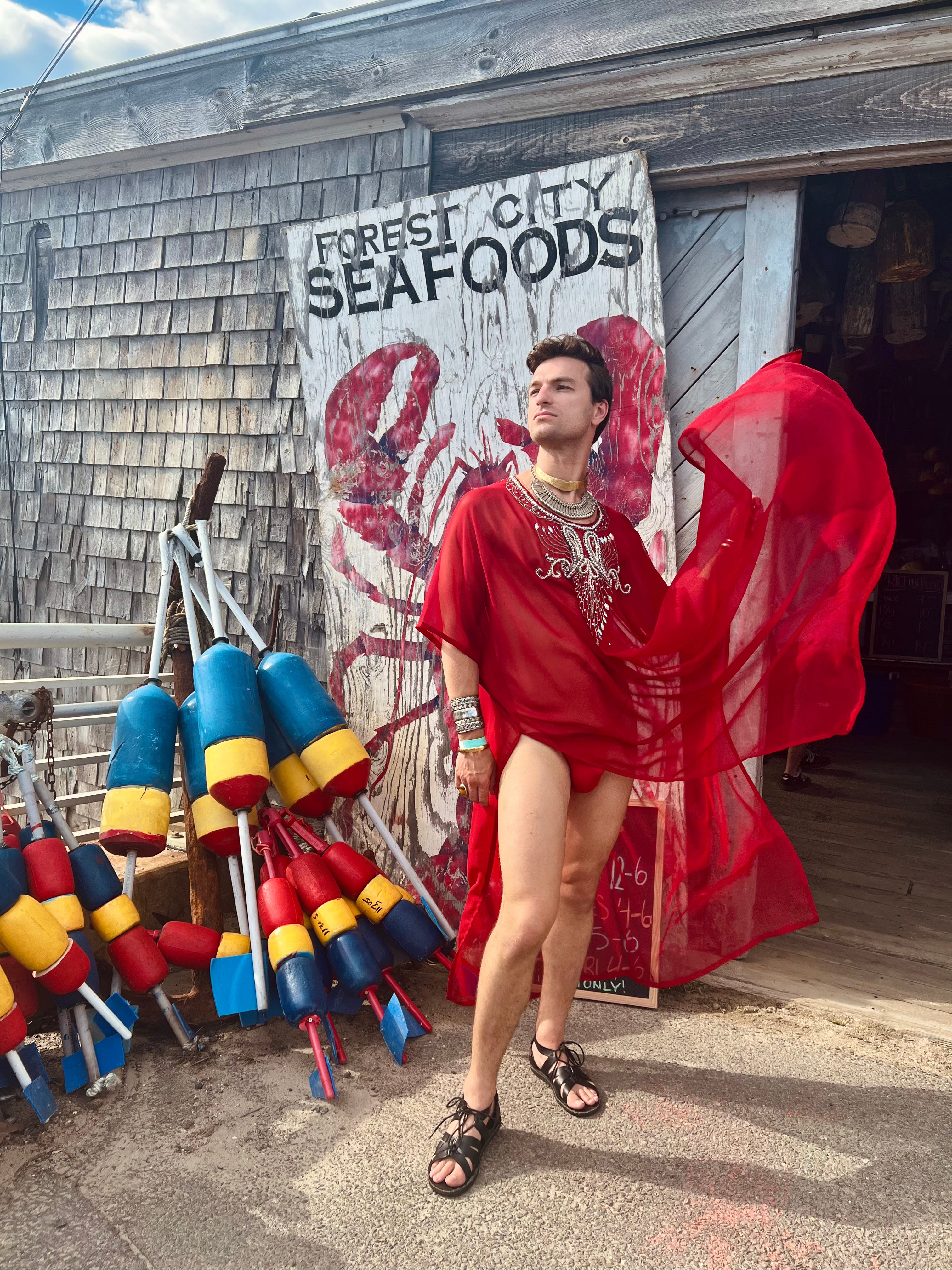
For me it’s more formal, but I see a lot of costume. Last year I wore a red sheer silk chiffon caftan that was covered in rhinestones. It was very, very see through so I had on red underwear and every piece of jewelry that I own. Very Janice Joplin. Very over the top. I don’t subscribe to the idea that for events you should take one thing off. I’d rather put five more things on.
On Work
In addition to chairing Pride, you work at United Way as a fundraising conduit for businesses in Portland, and you’re also a spin instructor at Jibe. There’s a lot of mental and physical fortitude needed for these different types of work. How do you balance it all?
The way I keep my head on straight is that every single night, seven nights a week, my boyfriend and I sit down at our dining room table and have dinner together. No matter what.
United Way is my career-career. I work to live, but I also take a lot of joy in the work of nonprofits. I worked for a long time in a sales career but I was unhappy. I talked to a couple of very trustworthy friends, older gays who had cultivated great careers. I said I wanted to get into fundraising, but I wasn’t sure what direction, and one of them told me to go work for United Way. They recommended it as a very established brand that would give me all the training I needed. And they did.
I’ve worked there for almost three years and I want to keep working there. I feel very strong in my voice for the community. I get to speak on behalf of 70+ nonprofits. I’ve studied their mission, their product, their program. And I get to go and advocate for these nonprofits at the boardroom level so that they can keep doing really important work.
“I got to a fork in the road where I either could walk away from it and have some personal sanity back, or I could dig my heels in and make sure the organization was safeguarded. I did the latter.”
And then Pride kind of fell in my lap. I am recently elected as the new board chair, but I originally joined the Board of Directors to support project-based work for them. I would pick one thing and I would do it. But through circumstance, the board shifted in 2025, and I got to a fork in the road where I either could walk away from it and have some personal sanity back, or I could dig my heels in and make sure the organization was safeguarded. I did the latter.
Jibe was always this idea of, Can I do this? Am I able to do it? I love it; it’s fun and I get a great work out there.
So it’s really busy. During the day it’s like go, go, go. My phone battery is dying every single day, five days a week. But it’s that quality time at home, regardless of all of that busyness, that keeps me balanced.
You mentioned there’s a yin and yang to your work at United Way and Pride.
My career [at United Way]is a career, so it’s year round. But I am giving the most of myself September through December. A lot of companies want to run their employee giving campaigns around Giving Tuesday and the holidays, when people are feeling extra generous to help those who have greater needs than their own. So that is my busiest time.
With Pride, the board meets monthly, but it’s very minimal until January 1 when we start planning Portland’s largest single day gathering in a year. That event comes together with the help of so many peer organizations. Police, fire, the city, the state. As chair I’m overseeing everything, but I’m supported by an incredible group of colleagues that gather their networks to make it all happen.
On fashion influence
Can you share some of the influences on how your style manifests day to day. Are there publications or profiles or people in your life that inspire how you get dressed?
In the early days, when I started dressing up a lot for work, I would read the The Sartorialist. It’s a fashion blog featuring a lot of street wear, a lot of stuff from Paris and Milan. Very street-wear-for-fashion-week, but buttoned up. It was very male-centric, so beautiful suits and silhouettes for men.
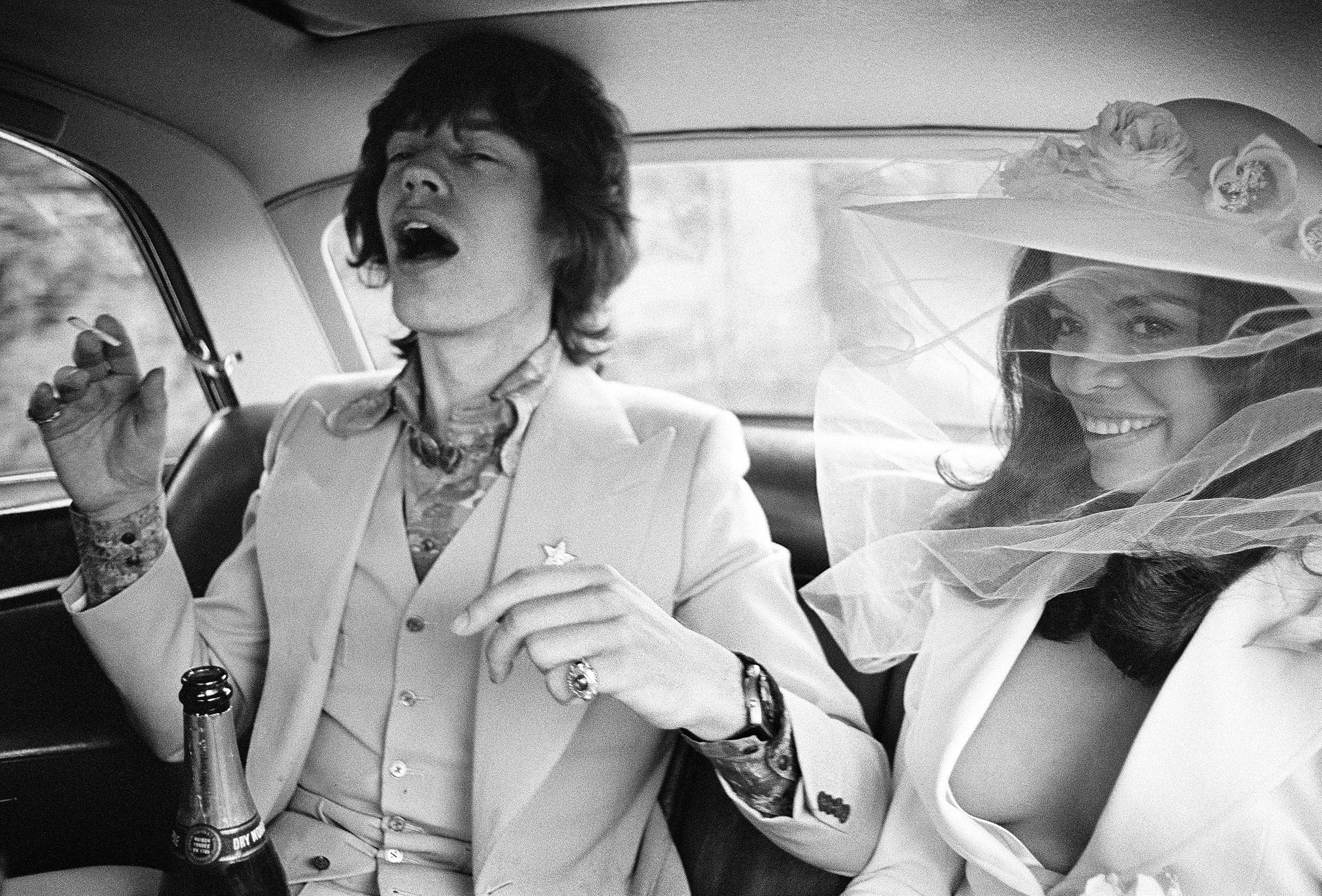
Now a lot of my inspo for clothing comes from people from the past. And I’m inspired by moments or eras. 90s fashion references like Princess Diana and her iconic fashion, or Carolyn Bessette Kennedy’s beautiful minimal style. Before the rise of the 90s supermodel, celebrity women were style icons. Like Lauren Hutton, she’s a beautiful model of the late 60s with this very big tooth gap. Women of the disco, people like Cher and Bob Mackie. Or one of my biggest style icons in the world is Bianca Jagger.
Who would you look to if you were in a fashion drought?
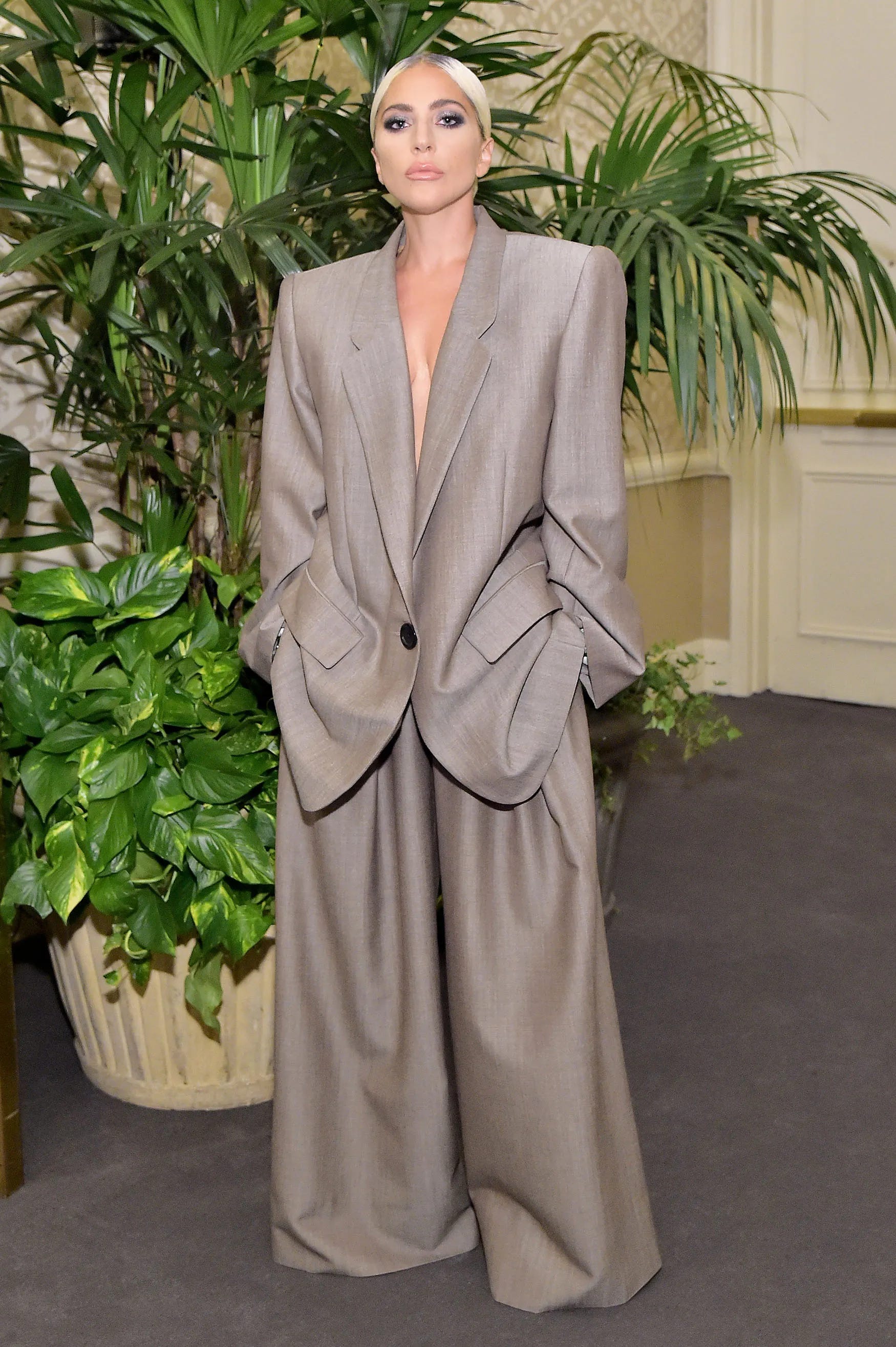
A year or two ago I saw a picture of Lady Gaga in this oversized suit, very intentionally covering her voluptuous form. Like taking away the power of sexualizing her body, and I loved that. So if I’m in a fashion drought I’m probably looking at artists like that, who I love and appreciate. I’m looking at people like Beyoncé or Harry Styles. People of the relevant moment.
You were just in Belize, tell me about your vacation wardrobe and did the trip spark any ideas for new outfits.
It was a mix of fashion and function. You would see me in the streets of Belize with my boyfriend, we’re on bikes, we have on UV protection fly fishing shirts, I’m wearing a baseball hat and big cycling sunglasses and we have snorkeling gear strapped to our backpacks and we’re in Chacos. We’re sweaty and dirty and a little nerdy. In a lot of ways we’re rough and tumble travelers.
The fashion side of my resort style is definitely more feminine. I’m wearing sarongs or little wrap skirts that I find at thrift stores. They’re long enough to cover what needs to be covered but they’re short enough for my legs to be out. I’m wearing gladiator sandals, body jewelry, shell necklaces, flowy tank tops.
We’ve been to other places that are gay friendly, like Puerto Vallarta, but I’ve also been on beaches in Italy and France and Portugal and you need to dress in a male way or you will get unrequested attention which can lead to danger. At least in the gay community, that’s danger to us. In those places I wasn’t picking my clothing as a way to stand out; and sometimes I intentionally picked clothing to not stand out to protect myself.
Belize had the most diverse tourists that I’ve seen while traveling, which is really refreshing. Everyone was very friendly, you’d be at dinner sharing a space with young women from Dallas and Houston and Atlanta and New Orleans. A lot of these young women of color had incredible style, very flashy, very colorful. Lots of body showing, lots of jewelry, lots of good colors. If I loved someone’s clothing I’d ask to take a picture. I was left thinking okay, how can I wear brighter clothes in the summer and walk in that confidence.
Is there anything about clothing or style that you want to sign off with.
I like that women have stepped into wearing whatever they want. Like the whole boyfriend jeans movement, stealing your boyfriend’s clothes and his cool hats — women have been doing that forever and have been doing it well. I just want to encourage guys to do the same and step out of their comfort zone.
If you see a beautiful piece of woman’s clothing that can fit you and still function, fucking go for it. ◊
This interview has been edited and condensed. Follow Tanner at @tannerskilton.
Georgia Dixon is a photographer living and working in Maine. GEOSTYLED started as a project to explore the art of getting dressed, and the Substack has grown to include profiles of artists, designers, and curators defining style in Maine. For more content like this, follow on Instagram @geo.styled and receive the weekly newsletter by becoming a subscriber.