

dress/code with Apphia Mpay
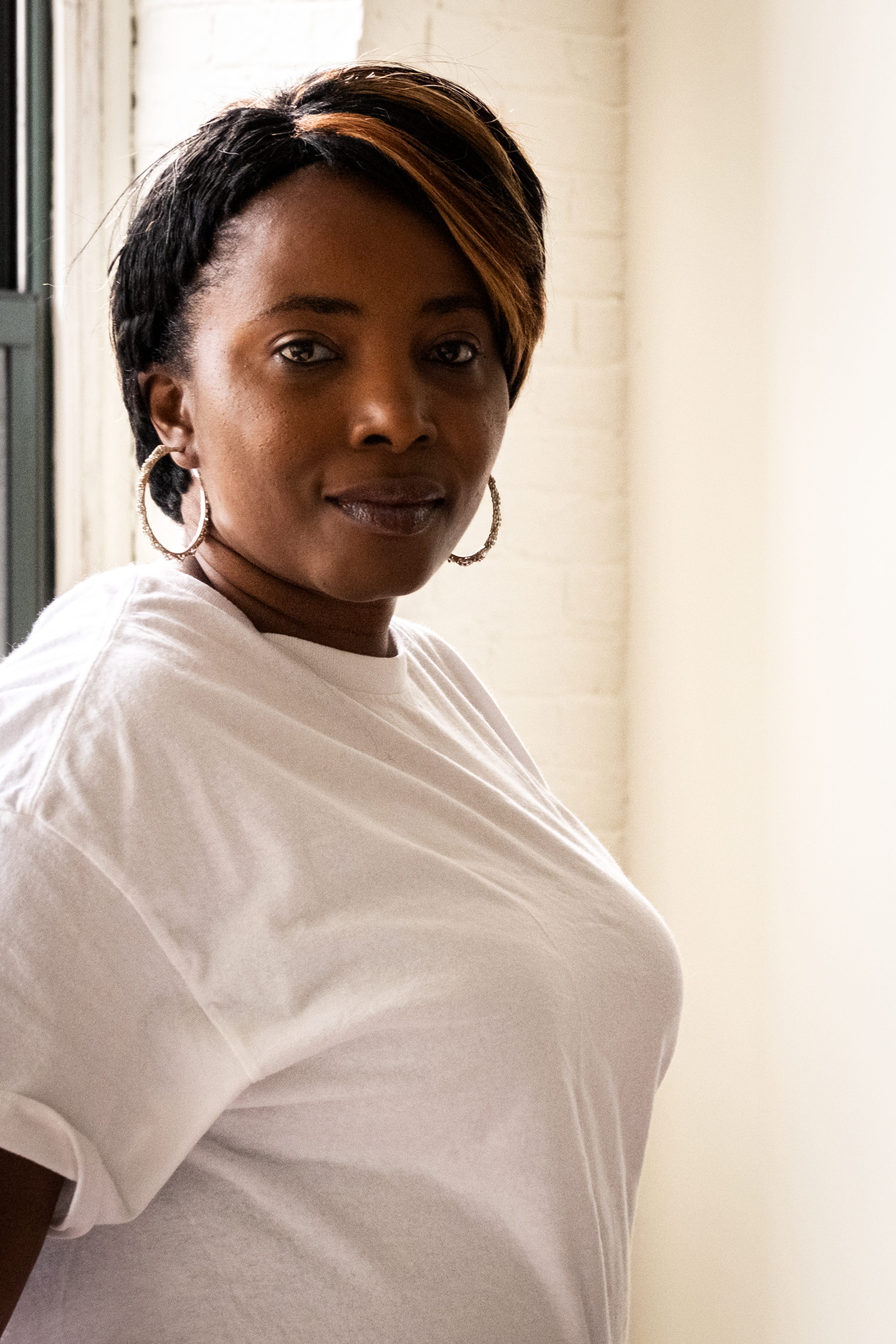
"Coming from a family of artists, we like designing, you know. I wanted to transform something. But in a different way, like with fashion, with clothes."

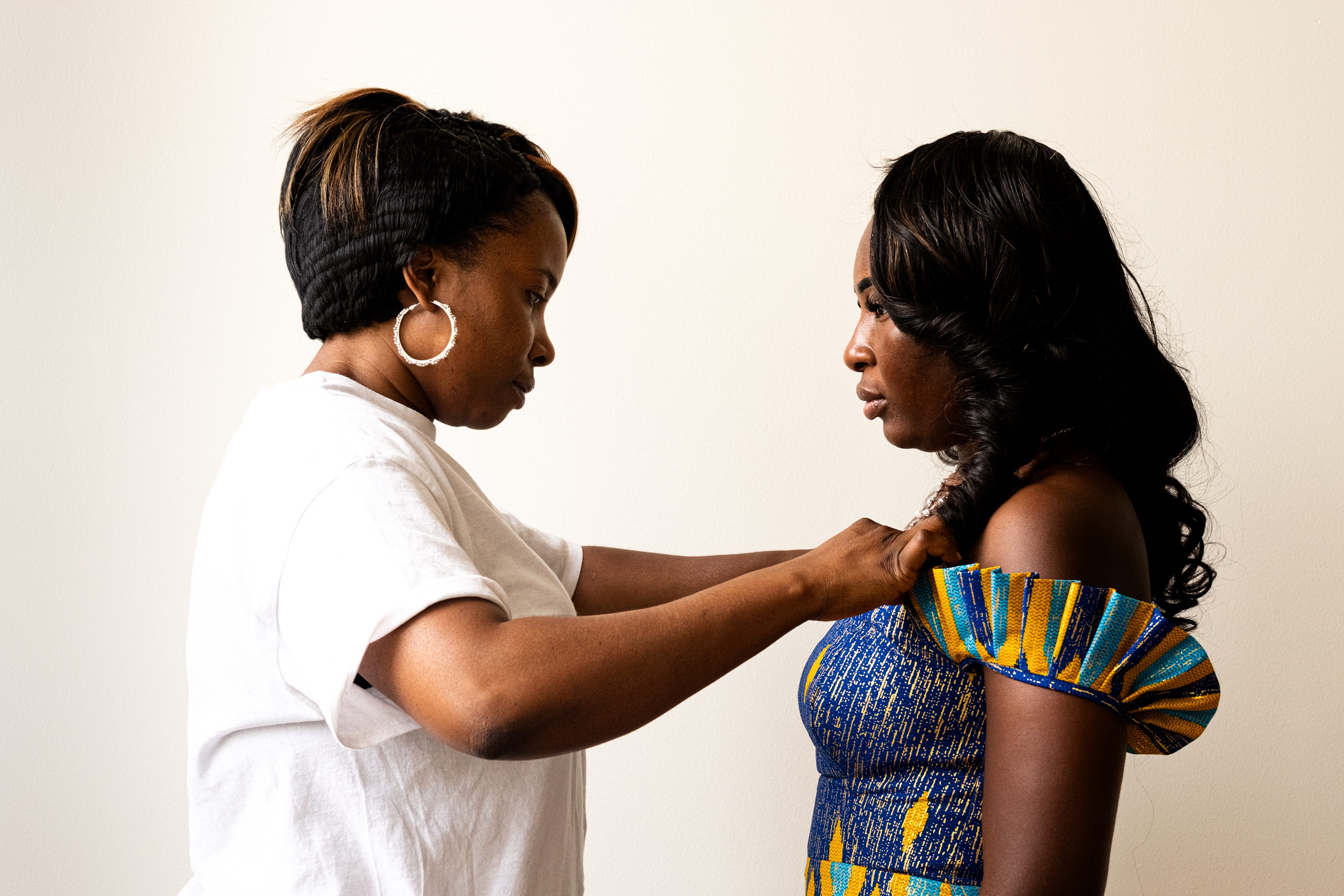
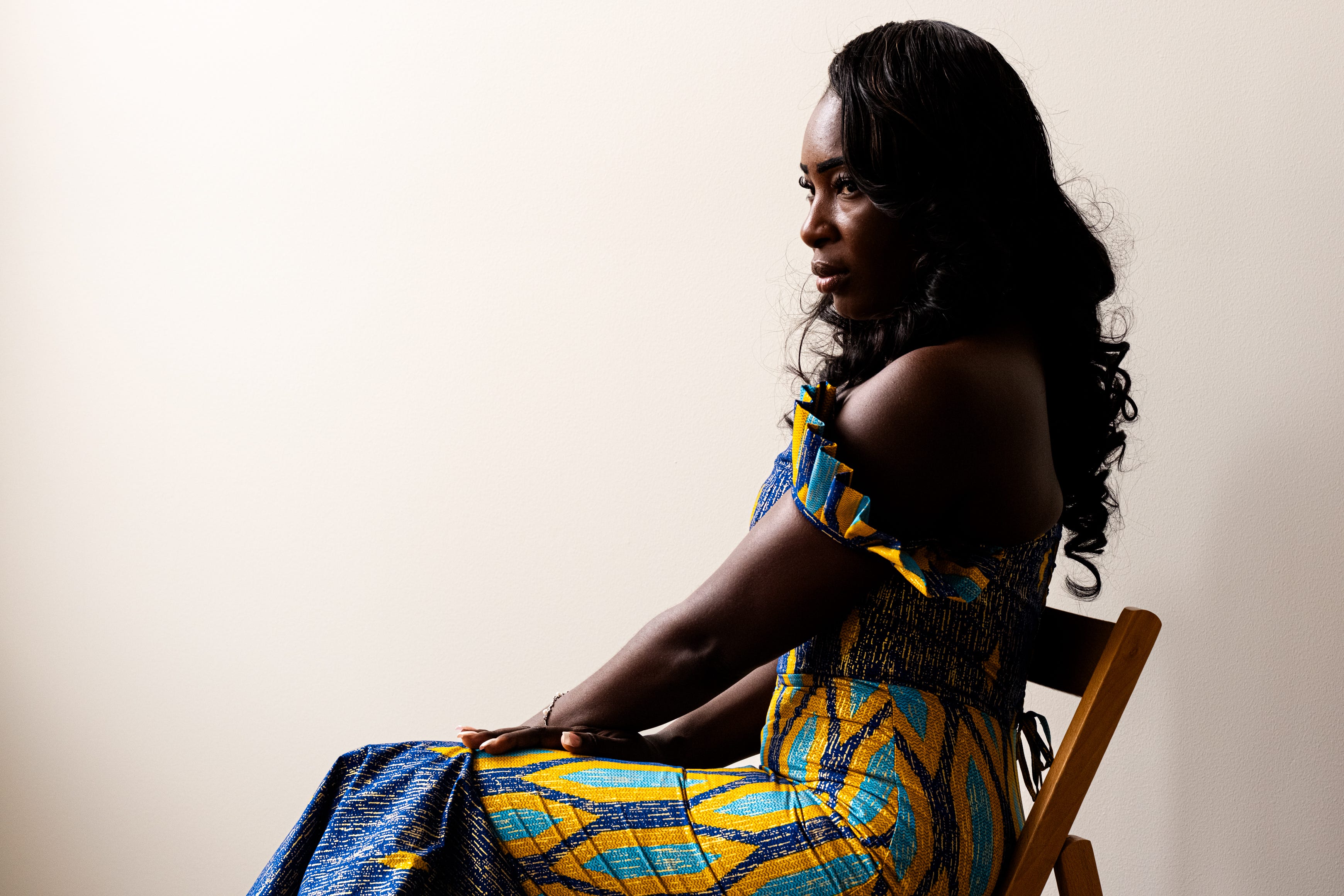
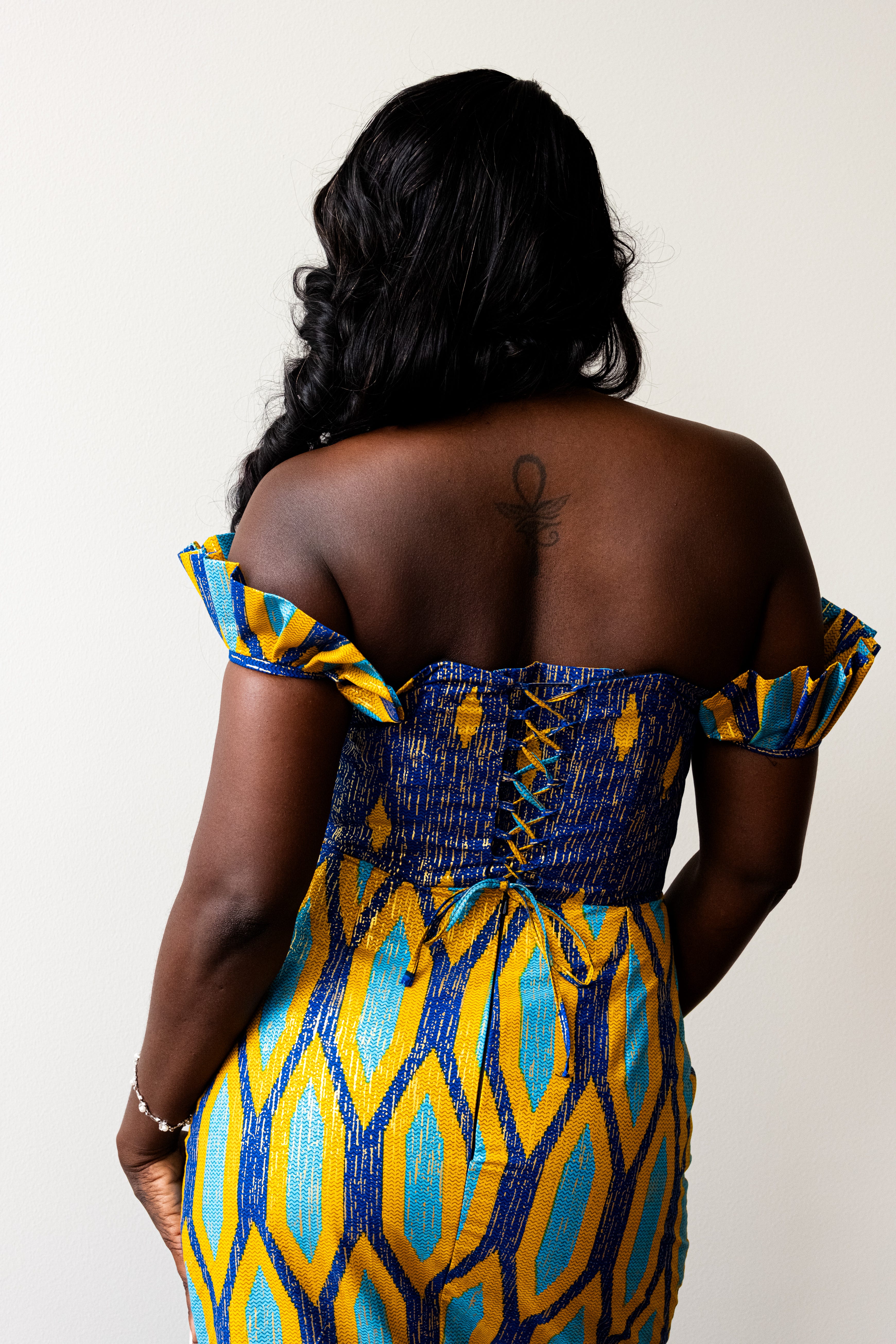
I met Apphia Mpay in spring 2025 when we both took a 6-week speech writing workshop through CEI Women’s Business Center. In one of Apphia’s final speeches she talked about how much she loved designing clothing for people, how she loved giving them confidence and individuality — from how she was speaking about getting dressed, I knew that she got ‘it’. This summer we got together to shoot one of her custom designed dresses in my new studio, and last month she joined me to talk about how she got started as a designer, and how she’s passing her knowledge to a new generation of stitchers.
Photos & interview by Georgia Dixon | Dana Warp Mill, September 29, 2025
On design
In our workshop, I remember you giving a speech about growing up being inspired by street style and all the color you’d see people wearing in your city. Can you talk a little bit about where you grew up and how those styles influenced the work that you’re doing today?
I grew up in the Democratic Republic of Congo, in the city Kinshasa. I was born there and I grew up there. I would say there are two things that influenced what I’m doing today. First is coming from a family of artists. My dad is a sculptor and I have two siblings who are doing the same job. I have another sibling who’s an architect, and another one who’s in digital design. Growing up, my dad wanted me to be a doctor. So when I started college I was studying chemistry and focused on becoming a doctor, but I started feeling like it wasn’t me. Something was pushing me in the opposite direction and at a point I decided to quit and go register at the fashion academy, where I studied for three years to get my bachelor degree.
The other thing that influenced me was, in Congo, we have the culture that we call Sapologie, or Sape culture. Which is, people dressing to impress. Most Congolese are known for that. Someone could be poor, nothing in their pockets, but when they go out they’ll be looking like a boss. If there’s a party, it’s like “who will be dressing the best”, and people want to have a certain style, they want to wear something that no one else has. If you go to a party, you don’t want to see someone wearing the same dress. So, yeah, all of that influenced me and I thought, maybe I can niche into that.
There are a lot of different paths that you could take with a fashion degree, how did you transform that degree into what you’re doing today?
Coming from a family of artists, we like designing, you know. Growing up I would see my dad working, like he might come home with a piece of wood and a couple months later, that wood is transformed into a piece of art. And then he would have an exposition and sell it. I saw that and I wanted to do it, I wanted to transform something. But in a different way, like with fashion, with clothes. Even when I was in school, I was doing things like drawing and making puppets with African fabrics, stuff like that, for my friends and for myself to play with.
So I think all of that plays a big role in what I decided to do in my life. That’s why I chose fashion design, because when you are designing you are bringing ideas to life. And I wanted that. And even today, I do that. You can come to me, tell me your idea, and I’ll bring it to life.
You work with a lot of striking colors and patterns, where do you find the unique fabrics that end up creating all of your final pieces?
In Maine there are some African stores where I can get fabric. Sometimes I purchase them online, like on Amazon or AliExpress. Or sometimes if you have people coming here from your country, you can just order it [there] and they’ll bring it to you.
What’s the process for creating a custom design, and are people wearing these designs more than one time?
It depends. As I said, Congolese, they like showing up. So sometimes if they’ve already worn a design, they don’t want to repeat it. But some people might wait for a year or two to wear it again. So you forget about it, then you’re wearing it again [laughs]. I’m mostly focused on creating pieces for special occasions. So for most people it’s not something they’re going to wear from day to day.
If someone has a design they’re thinking about we go with that design, but if they don’t have an idea, I will help them. I also see if the design matches with the fabric they have, because not all designs and fabrics will match. So we go through all of that until we get a final piece.
On teaching
You’ve posted about students who go on to provide custom tailoring services. Tailoring used to be a really big part of the garment culture, but I think the expectation of getting clothes regularly adjusted has faded. Where does tailoring fit into today’s world of fast fashion and how do you think we can support and grow mindshare for finding and using local tailoring services?
Some people like fast fashion, but there’s also a lot of other people who are tired of it. There’s the Save the Planet movement that is now in vogue, but a lot of people are also looking for options to keep what they already have and make it last.
Also, people buy clothes online and there’s always problems. Something is too big, too long, too small — so tailors will always have a job to do. Sometimes I tell my students, if you think that fashion design is too hard because you have to design or you have to draft patterns, then go with tailoring, go with alterations. I have students who are now successful with the alteration business because it’s always in demand.
And we can support tailoring even if it’s not by alterations. You have people who want to redesign their clothes by upcycling them. Maybe it was a dress, and you want to make it a shirt. Or it was a shirt, and you want to make it a bag. People like memories, so they want a way to keep their memories. Like recently, I had man who wanted me to upcycle a soccer jersey into a bucket hat because he wanted to keep the memory of that shirt. I also had a lady who wanted to redesign her wedding dress for her 30th wedding anniversary. It was a long dress with long sleeves, and we redesigned it to be off-shoulder and we made it shorter; it came out very good.
Sometimes people are just tired of wearing plain clothes and want to redesign them. Like with jeans, maybe we add flower jewelry, or we add some some beads, stuff like that. With fabric we can change the gathering and it becomes a different style. And when you are wearing something like that, it sparks conversation. So all of that is what tailors are doing today.
I hear a lot of “I can’t do it.” I usually have to tell my students, “I don’t like that sentence. Don’t say it when you’re with me. You can learn. Don’t say no, say not yet.”
In addition to designing you also teach sewing here in southern Maine, and it seems like a big point of passion and pride for you. What is your favorite part of being a teacher?
A lot of people, when they come to learn to sew for the first time, they are scared. The class is intense. It’s 14 weeks. Three days a week, 8:30 to 2:00. When we start the class, I give everyone a new sewing machines to take home so they can practice, and I give homework every week so students can keep practicing when they are home.
I want my students to have bold mindsets. I hear a lot of “It’s hard” and “I can’t do it.” I usually have to tell my students, “I don’t like that sentence. Don’t say it when you’re with me. You can learn. Don’t say no, say not yet.”
Like last week one of my students was having a big problem with confidence and now she’s telling me about her idea for a project, saying “Oh, I think by next year I can be my own boss.” I was like, “whoa! Now you’re talking!” So seeing the result when a student starts becoming confident, that’s the best part. Seeing that the job you’re doing is making transformations; it’s helping people, it’s transforming lives.
Are most students new to sewing?
It’s a mix. I have those who come with some background, I have those who come with no background, but I take them all and try to find a good balance as we go through the class.
The primary goal is to help students find a job in the textile industry, so we also teach them expectations for when they find a job. We do different projects related to the industry. For example, there’s a company here in the Dana Warp Mill called American Roots, they make custom pieces like fleeces, hoodies, etc. So in my class we’re going to make some of those products. The students will learn how to sew specific patterns so when they go for an interview, they are ready.
We work with other local companies like Angelrox [Suger], Sea Bags, and Flow Fold, and we’ll take prototypes from these businesses so that the students can learn how to make them. That’s why it doesn’t matter if you have experience or not. If a student wants to go deeper with crafting, pattern design, etc then we have another class during summer that’s more advanced.
So these companies providing prototypes, do they end up getting connected with students from the class?
Yes, we collaborate with them directly. We also do field trips, we visit 2-3 of these factories so students can see how things work. And if the companies are looking to hire a stitcher they will email us to see if we have students ready.
In the class the students take a variety of directions. We have students who’d like to find a job, we have students who’d like to start their own business, we have students who’d like to become a contractor, working from home, but for other people. So in addition to the field trips, we also have a workshop where we bring in other organizations to teach students about running a business. For example, CEI does a workshop about how to start a business. They give students what they need to know about the advantages of having your own business verses working for someone else.
How can someone take one of your classes?
I do two classes. One runs March to June, the other runs September to early January. There is an application process, so you would send in an application and then there would be an interview to see if you’re a good match. We usually have a long waiting list, with Westbrook Adult Education there are six slots per class, so it fills up very quickly.
One final question, what’s your advice for creating and nurturing your own sense of personal style?
In my country, in French, there’s an expression, “tastes and colors cannot be discussed”. Meaning, it’s personal. [English equivalent “to each his own”] It’s the same with personal style. That’s why I like what I do, because when I’m doing custom designs I’m making people what they really want to be. It’s a way to help people embrace their style, and be a part of how they present themselves to the world. It’s very important, that part.


This interview has been edited and condensed. Follow @apphia_mode_and_style to see more custom designs by Apphia.
Georgia Dixon is a photographer living and working in Maine. GEOSTYLED is a substack where she writes about the art of getting dressed. For more content like this, follow on Instagram @geo.styled and receive weekly substack edits by becoming a subscriber.
Thank you Georgia for this amazing article. I really loved it. It was a pleasure working with you.